

HSDSC Affiliates Use SDSC Expanse to Discover How Size Shapes the Future of Nanomedicine
Published October 19, 2026
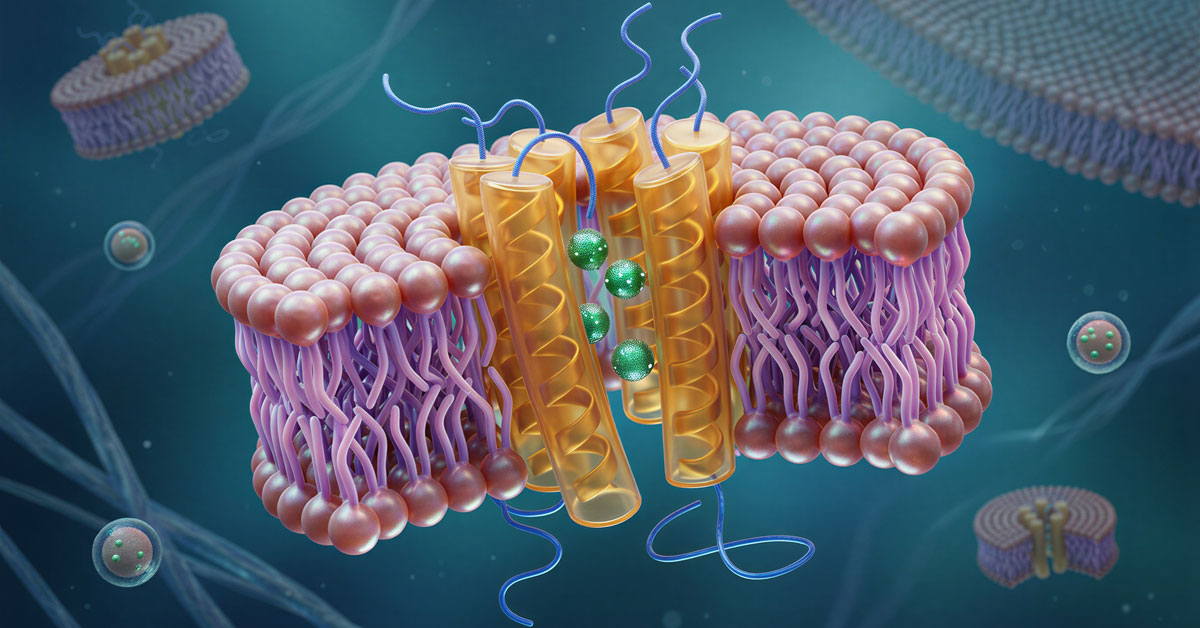
Scientists have long been interested in cellular nanodiscs, tiny particles made from natural cell membranes that mimic many of the functions of living cells. While previous studies demonstrated the therapeutic potential of nanodiscs for drug delivery, detoxification and vaccines, one fundamental question remained unanswered: How does size influence how well they work?
Researchers from the University of California San Diego have discovered that size has more of an impact than scientists once realized. Shrinking cellular nanodiscs dramatically improves their ability to bind biological targets and neutralize harmful bacterial toxins. The findings, recently published in Small, establish new design principles that could help scientists build more effective nanomedicines by combining laboratory experiments with high-performance computing.
The interdisciplinary research effort included Halıcıoğlu School of Data Science and Computing affiliates Liangfang Zhang and Kesong Yang, who are professors in UC San Diego's Aiiso Yufeng Li Family Department of Chemical and Nano Engineering. The study paired experimental biology with computer simulations, using National Science Foundation (NSF) ACCESS allocations on the San Diego Supercomputer Center (SDSC) Expanse system to uncover why particle size has such a profound effect on biological performance.
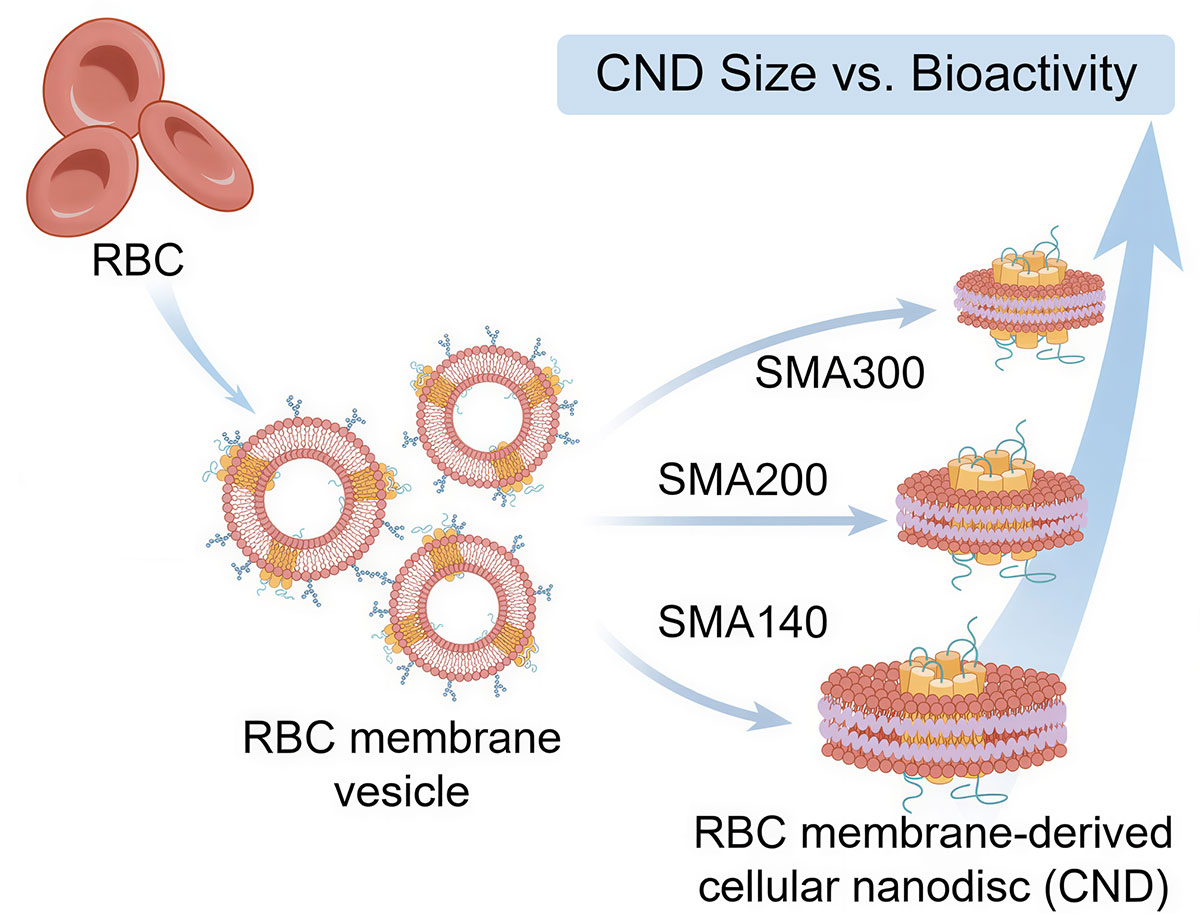
“To answer this question (of size), our team engineered three versions of red blood cell-derived cellular nanodiscs measuring approximately 71, 26 and 15 nanometers in diameter,” said Zhang, professor and department chair for the Aiiso Yufeng Li Family Department of Chemical and Nano Engineering and recently named a 2026 MacArthur Fellow by the John D. and Catherine T. MacArthur Foundation. “Aside from their size, the particles were nearly identical, allowing us to isolate a single variable and determine how it influenced biological function.”
The results revealed a clear pattern. Across multiple laboratory experiments, the smallest nanodiscs consistently outperformed the larger formulations. They attached to antibodies more efficiently, interacted with biological targets more rapidly, and neutralized bacterial alpha-toxin more effectively. When researchers tested the particles in mice exposed to the toxin, the smallest nanodiscs also provided the greatest protection, demonstrating that the benefits extended beyond the laboratory and into living systems.
The laboratory experiments showed researchers what was happening. Computer simulations using NSF ACCESS allocations on SDSC’s Expanse helped explain why.
“We used our allocations on SDSC’s Expanse to develop a simulation framework that modeled how nanodiscs move through their environment and interact with surrounding molecules,” said Yang, who is a professor of chemical and nano engineering. “Our simulations closely matched the laboratory findings, revealing that smaller nanodiscs diffuse more rapidly and exist in greater numbers for the same amount of material.”
Together, these advantages increase the likelihood that they will encounter and bind biological targets. The close agreement between the simulations and experimental observations demonstrates how advanced computing can help uncover biological mechanisms that are difficult to observe directly.
Beyond explaining the behavior of cellular nanodiscs, the study highlights the growing role of computational biology in biomedical research. Rather than relying solely on trial-and-error experiments, researchers can develop appropriate simulation models and frameworks to predict how promising therapeutic materials will behave before testing them experimentally. Integrating simulations with laboratory validation allows scientists to better understand complex biological systems while accelerating the development of safer and more effective nanotechnologies.
By identifying particle size as a fundamental driver of cellular nanodisc performance, the researchers have provided a practical blueprint for designing next-generation membrane-based therapeutics. The findings could help optimize future technologies for drug delivery, toxin neutralization and other biomedical applications. As advanced computing becomes increasingly integrated with experimental science, studies like this demonstrate how computational modeling can accelerate discovery and help translate promising ideas into future medical technologies.
The computational simulations performed on the Expanse system were supported by NSF ACCESS (allocation no. DMR160045). The research was supported by the Department of Defense Defense Threat Reduction Agency and the American Chemical Society Petroleum Research Fund.