

Thanks to SDSC’s Expanse, New TRIP50 Benchmark Helps Scientists Spot Hidden Errors in Chemical Modeling
Published August 11, 2026
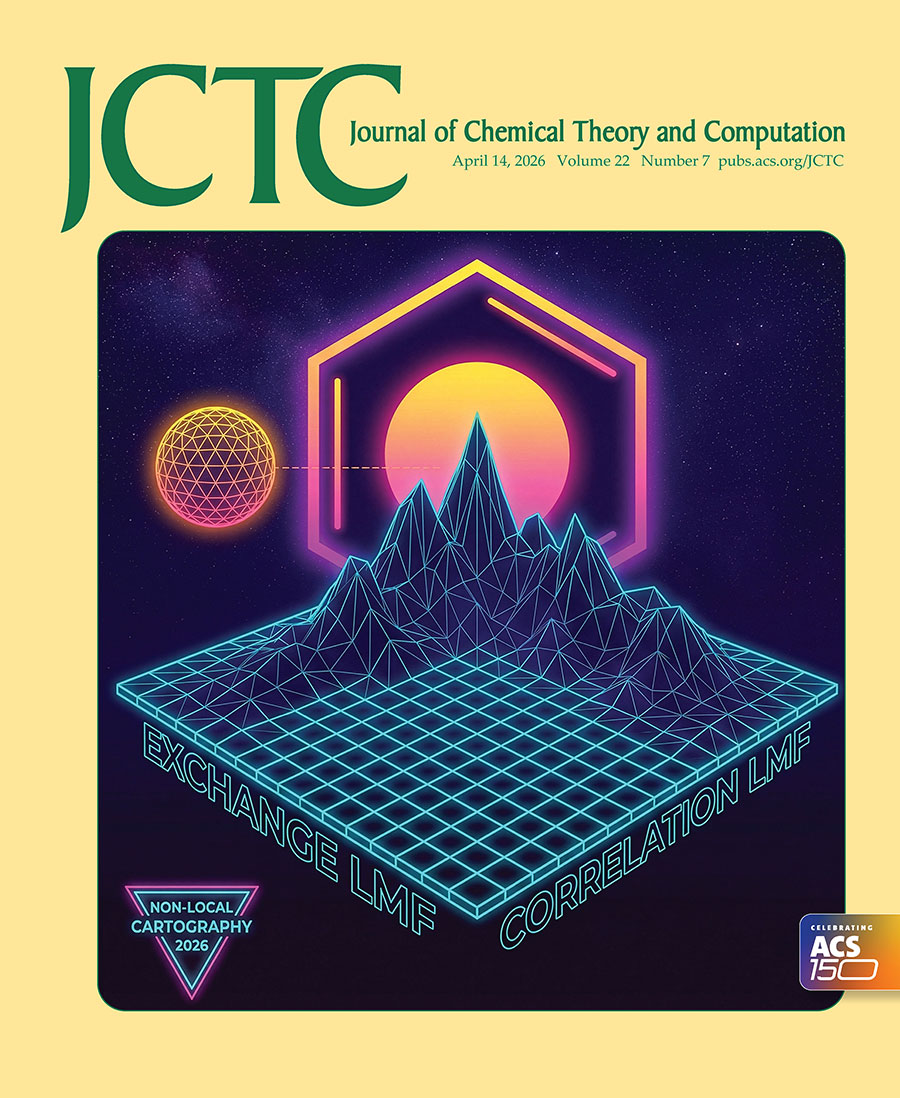
The Journal of Chemical Theory and Computation featured the study on the cover.
Chemists often use a computational method developed at UC San Diego called density functional theory (DFT) to study chemical reactions and predict how molecules behave. DFT is especially useful for investigating triplet states, which are high-energy electronic states that play important roles in processes such as combustion, atmospheric chemistry and the development of new materials.
Because DFT software is widely available and relatively easy to use, many researchers treat it as a “black box,” trusting the results without fully examining how the calculations are performed. However, a recent study published in the Journal of Chemical Theory and Computation found that some commonly used DFT approaches can produce incorrect results when modeling triplet-state chemistry.
Using National Science Foundation (NSF) ACCESS allocations on the Expanse system at the University of California San Diego Halıcıoğlu School of Data Science and Computing San Diego Supercomputer Center (SDSC), researchers at Colorado State University (CSU) created a new benchmark called TRIP50 to evaluate the accuracy of DFT methods for triplet-state reactions.
Building a Better Test
TRIP50 consists of 50 carefully selected organic reactions that represent a wide range of chemistry relevant to chemical synthesis, atmospheric processes and materials science.
“For each reaction, we used our NSF ACCESS allocations on SDSC’s Expanse to calculate highly accurate reference energy values and compared them against the predictions made by 45 different DFT methods,” explained CSU Chemistry Professor Robert Paton. “This use of Expanse allowed us to identify which approaches consistently produced reliable results and which were more likely to fail.”
During the study, Paton said that the team led by William Hughes, a CSU doctoral student, and Dr. Mihai Popescu, a postdoctoral researcher in the group, uncovered a surprising problem.
“In many cases, the software accidentally switched to the wrong electronic state while performing calculations,” Hughes said. “This issue occurred during a step known as the self-consistent field (SCF) process and often led to inaccurate energy predictions.”
Because most computational workflows do not automatically check for these mistakes, the errors can go unnoticed and may even make their way into published research.
Improving Reliability
The team also demonstrated a solution.
“By adding additional verification steps to our calculations, we were able to detect and correct these incorrect electronic states before they affected the results,” Hughes said.
Once the errors were removed, a clear pattern emerged: newer, more advanced DFT methods generally produced more accurate predictions than many older, less computationally demanding approaches. The findings provide researchers with practical guidance on which methods are most trustworthy for studying triplet-state chemistry.
Why It Matters
“For each reaction, we used our NSF ACCESS allocations on SDSC’s Expanse to calculate highly accurate reference energy values and compared them against the predictions made by 45 different DFT methods. This use of Expanse allowed us to identify which approaches consistently produced reliable results and which were more likely to fail.”
Accurate computer simulations are essential for modern chemistry. Scientists use these models to understand chemical reactions, design new materials, improve energy technologies, and study environmental processes.
When hidden computational errors occur, they can lead researchers to draw incorrect conclusions about how reactions work. These mistakes can affect research related to pollution, solar energy, electronics, and many other fields.
“The TRIP50 benchmark provides a valuable tool for identifying and preventing these problems,” Paton said. “As computational chemistry becomes more accessible and more researchers rely on DFT software, TRIP50 helps ensure that results are both accurate and reproducible.”
He said that the study also highlights the important role of high-performance computing resources, such as SDSC's Expanse supercomputer, in improving the reliability of scientific discovery.
The research team has made the TRIP50 dataset available on Hugging Face, so that others can develop machine learning models using this data.
The time on Expanse was supported by NSF ACCESS (allocation no. CHE180056).