

Looking Beneath the Shell: AI Helps Protect Endangered Abalone
Published July 01, 2026
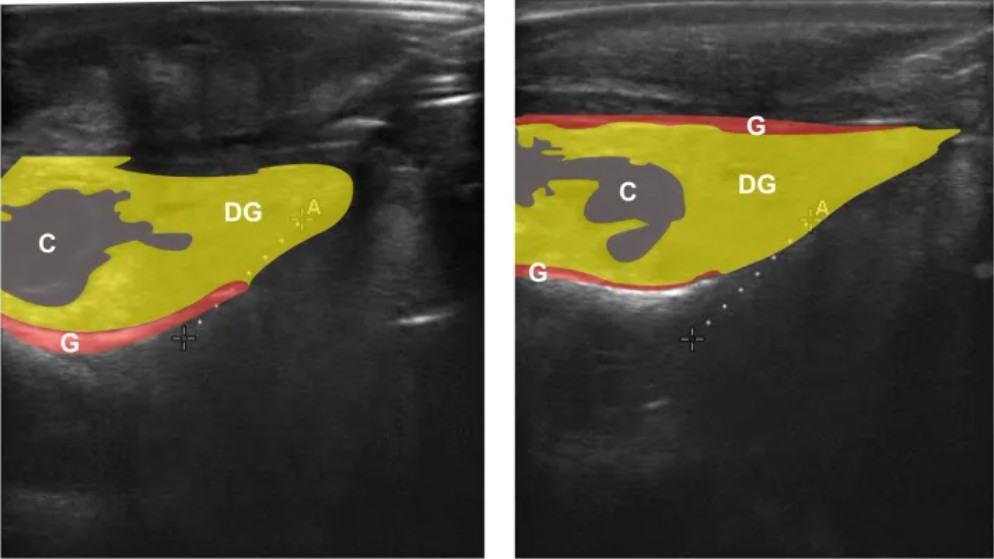
Abalone, prized for their colorful shells and coastal importance, have faced severe population declines along the U.S. West Coast. One challenge in helping these endangered animals recover is determining when an abalone is ready to spawn and whether an abalone is male or female early in their development. Both are something that cannot be seen from the outside.
To address this issue, a research team led by former University of California President’s Postdoctoral Fellow Edwin Solares conducted a study using the Expanse system at the University of California San Diego Halıcıoğlu School of Data Science and Computing (HSDSC) San Diego Supercomputer Center (SDSC) to develop an artificial intelligence system that can identify the sex of red abalone using ultrasound images.
Traditionally, determining an abalone's sex requires removing the giant marine snail from its rock or tank and examining its reproductive tissue, a process that can be stressful and sometimes harmful as they can be injured in the process. Solares and his team instead combined ultrasound imaging with AI, allowing researchers to identify male and female abalone without injury. This allows for easier identification of the gender of an abalone, and in turn, helps to increase breeding success while supporting population recovery efforts.
The team used National Science Foundation (NSF) ACCESS allocations on both Expanse at SDSC and Bridges-2 at the Pittsburgh Supercomputing Center (PSC) to train several AI models using thousands of ultrasound images from abalones of known sex. Their best-performing model correctly identified an abalone's sex about 86% of the time and could deliver results almost instantly.
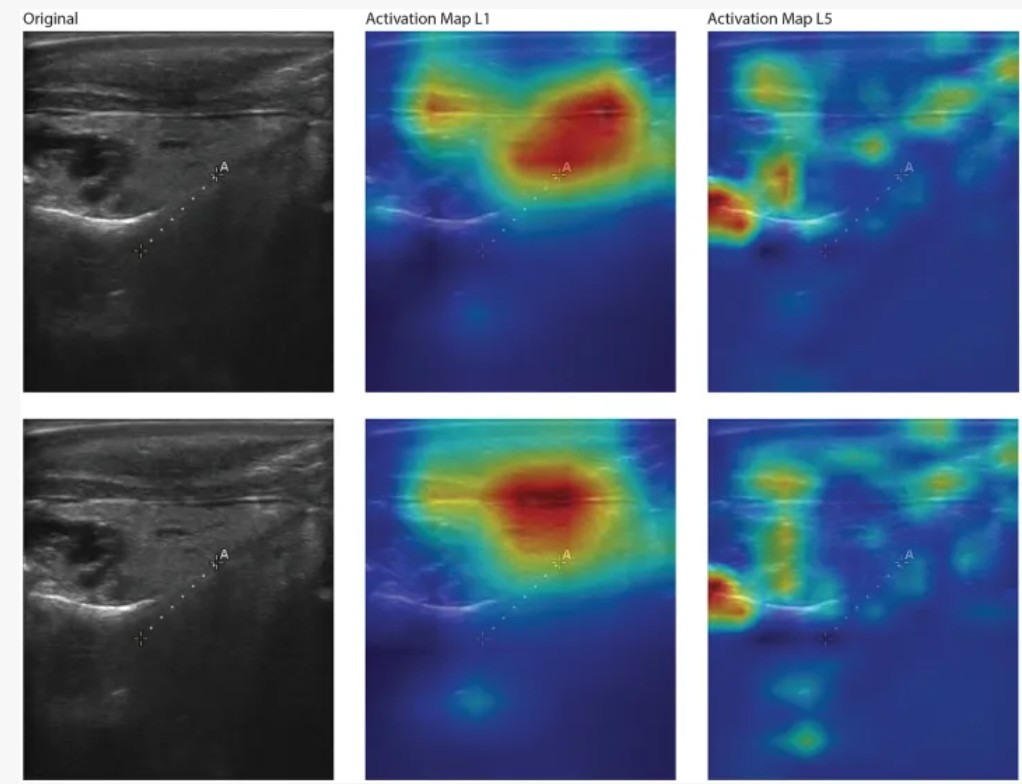
Feature maps from the YOLOv8 model that display two correctly classified male red abalone genitalia. The red represents the highest Activation L1 refers to a broad scan of the image, determining genitalia and the surrounding tissue. Activation L5 shows multiple focused areas of interest, clearly defining where the reproductive organs are and areas below it. This displays how the CCN first recognizes a broad area of interest and then analyzes it to find the reproductive organs. Credit: Edwin Solares
"Thanks to the NSF ACCESS allocations, we were able to reveal practical knowledge for future conservation efforts, and we could not have achieved this without the power of Expanse at SDSC and Bridges-2 at PSC," said Solares, a lecturer at the UC San Diego Jacobs School of Engineering's Department of Computer Science and Engineering as well as the HSDSC Halicioglu Data Science Institute.
Solares said that the new technology could help hatcheries and conservation programs select the most mature male and female abalones more efficiently, increasing breeding success and support population recovery efforts. Additionally, the AI could detect internal structures that are difficult for humans to see, opening the door for future applications such as health assessments.
“While we need more data to improve accuracy, especially for smaller abalones, our study demonstrates how artificial intelligence and high-performance computing like Expanse and Bridges-2 can provide new tools for protecting endangered species.”
The work on Expanse and Bridges-2 was supported by NSF ACCESS (allocation no. MCB180035).