

UC San Diego Helps Prepare AI Tourism Assistant for World Cup Crowds
Published July 02, 2026
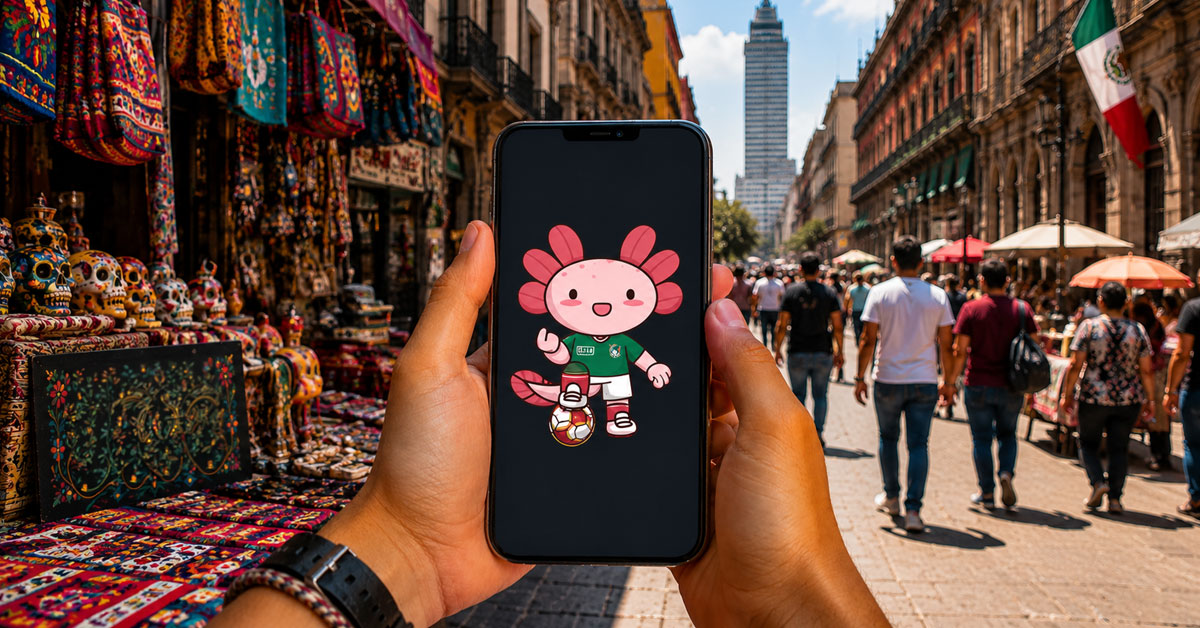
A San Diego Supercomputer Center team recently worked with Mexico's Digital Agency of Public Innovation on their efforts for an AI assistant called Xoli. The goal is to provide tourists with real-time assistance during the FIFA World Cup. Image generated by AI.
As Mexico City prepared for the surge of international visitors expected during the FIFA World Cup, developers behind an artificial intelligence (AI)-powered tourism assistant turned to the University of California San Diego Halıcıoğlu School of Data Science and Computing (HSDSC) for help scale testing their technology to meet anticipated demand.
The AI assistant, known as Xoli, was designed to help tourists navigate the city, discover attractions, access local information and receive real-time assistance during one of the world's largest sporting events. To ensure the system could handle large numbers of simultaneous users, the development team sought access to advanced computing resources and expertise in deploying large language models (LLMs).
“We were proud to support Mexico City in preparing for a global event of this scale,” said HSDSC San Diego Supercomputer Center Director Frank Würthwein. “And as neighbors, we’re especially excited to see both Mexico and the United States shine on the world stage — ideally all the way to facing each other in the final rounds!”
SDSC research scientists Diego Davila and Mohammad Sada worked closely with project developers from Mexico City’s Agencia de Innovacion Publica, which leads the city’s information technology efforts. They specifically demonstrated how an open-source platform for managing applications across distributed computing resources could be used to load balance the AI model across multiple GPUs.
“By distributing requests across all four GPUs, we were able to evaluate how the system would perform under the heavier workloads expected during the World Cup,” Davila explained. “This collaboration illustrates how SDSC’s expertise extends beyond scientific research, helping organizations deploy advanced artificial intelligence technologies for real-world public service applications.”
While the project centered on tourism and visitor engagement, the same scalable AI infrastructure techniques are increasingly being used across sectors including education, healthcare, government services and scientific discovery. By combining advanced computing resources with technical guidance, SDSC and the NRP helped position the project to better serve the millions of visitors expected to travel throughout Mexico during the World Cup, demonstrating how research cyberinfrastructure can support large-scale public initiatives with global reach.