

Murray State University's Hydrogen Storage Study, Powered by SDSC's Expanse, Lands on Journal Cover
Published June 23, 2026
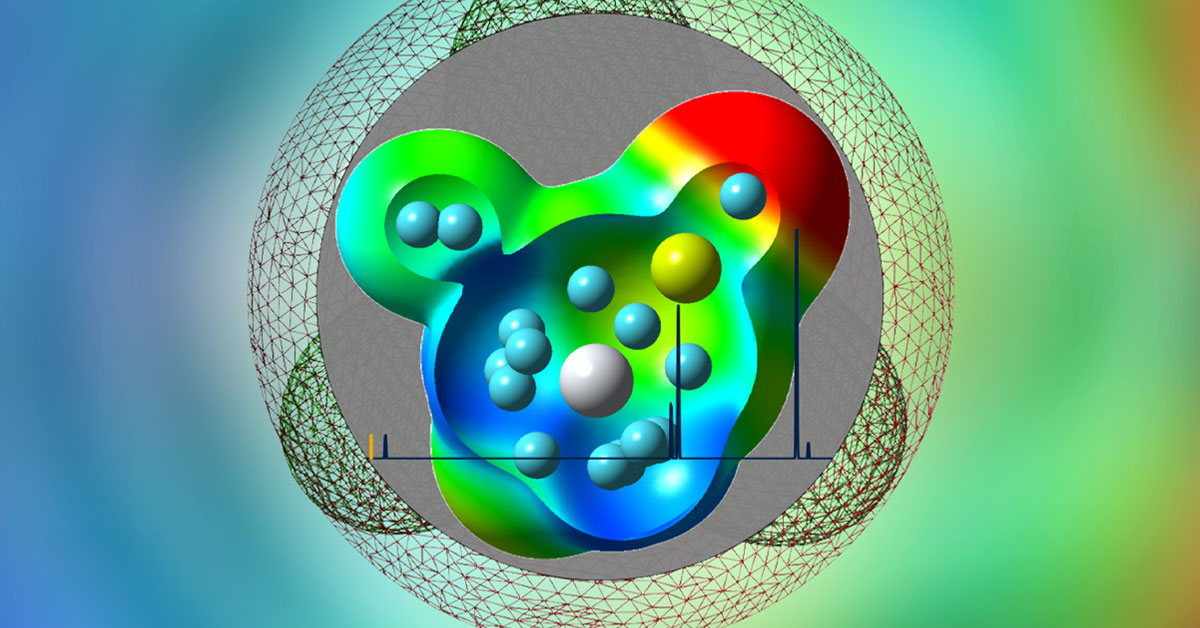
Hydrogen offers the possibility of a clean alternative energy source and a study conducted at Murray State University using NSF ACCESS allocations on SDSC’s Expanse provides insight into ways to make this a viable option in the future. The work was featured on the cover of the Hydrogen journal.
A computational chemistry study from Murray State University that could help guide the design of safer, more efficient hydrogen storage materials has earned cover-feature recognition in the open-access journal Hydrogen. The calculations behind the findings were run on the Expanse high-performance computing (HPC) system at the San Diego Supercomputer Center (SDSC) at University of California San Diego Halıcıoğlu School of Data Science and Computing.
The paper, “Double-Hybrid Density Functional Theory Investigation of MgScHn and MgTiHn Clusters (n ≤ 18),” was authored by Jonathan T. Lyon, an associate professor of chemistry at Murray State University (MSU) in Murray, Kentucky, and published online June 2, in Hydrogen. The work was selected for the issue's journal cover, with the print issue scheduled for official release later this month. The study is part of a special issue on “Atomic and Molecular Clusters for Hydrogen Storage.”
A Cleaner Fuel, With a Storage Problem
Hydrogen is widely seen as a promising clean-burning alternative to fossil fuels, producing only water as a byproduct when consumed. But storing it safely and efficiently remains a major obstacle. Compressing or liquefying hydrogen gas requires extreme pressures or cryogenic temperatures, and many alternative approaches come with their own tradeoffs.
Solid metal hydrides, compounds that bind hydrogen directly into a material's structure, offer a promising path forward. Magnesium hydride, in particular, is an attractive candidate because magnesium is light, abundant, non-toxic and inexpensive. Its main drawback is sluggish hydrogen uptake and release. Researchers have found that doping magnesium hydride with transition metals such as scandium or titanium can significantly improve these sorption kinetics, motivating a closer look at how those metals interact with hydrogen at the atomic scale.
Modeling Atom-by-Atom Behavior
To better understand those interactions, Lyon's team modeled small MgScHn and MgTiHn clusters, atomic-scale stand-ins for the larger bulk materials, containing up to 18 hydrogen atoms. Using a double-hybrid density functional theory method (DSDPBEP86) paired with a large basis set, the researchers mapped out how these clusters grow, where hydrogen atoms prefer to bind, and how the clusters’ stability changes as more hydrogen is added.
“This level of theory had not previously been applied to these particular cluster systems, and for good reason: it's a newer level that is more computationally demanding,” Lyon said. “Our calculations using SDSC’s Expanse took approximately 11 times longer than our previous studies using a more standard DFT method, underscoring our need for HPC resources like those available via NSF ACCESS.”
Lyon said that the results refine earlier predictions about exactly how much hydrogen these clusters can bind before becoming “saturated” and where precisely the hydrogen atoms are located. That is, the team found that MgScHn clusters reach their saturation point at 13 hydrogen atoms, while MgTiHn clusters can accommodate one more, reaching saturation at 14, corresponding to hydrogen mass percentages of 15.9% and 16.4%, respectively. Beyond these limits, additional hydrogen exists as loosely bound, dissociated H2 molecules clinging to the cluster's surface, a detail that offers clues about how hydrogen might be released from these materials during use.
“Our study also traces, for the first time at this level of theory, the precise size at which the structural preferences of scandium- and titanium-doped clusters begin to diverge, and identifies the cluster sizes that are most stable for each metal,” Lyon said.
Big Science at a Small Campus
The computations were performed on Expanse through an allocation awarded by the National Science Foundation Advanced Cyberinfrastructure Coordination Ecosystem: Services & Support (ACCESS) program (allocation CHE130094). For Lyon, whose lab is based at MSU, a primarily undergraduate institution without its own large-scale computing center, ACCESS allocations on Expanse have been essential to carrying out research that would otherwise be out of reach, while also giving undergraduate students hands-on experience with high-performance computing.
“Thanks to NSF ACCESS support for supercomputing resources, our study continues to build on our team’s earlier work modeling magnesium-scandium and magnesium-titanium hydrogen clusters at lower levels of theory, extending those findings to a more accurate and expensive technique,” Lyon said. “This research was supported by both NSF ACCESS for the use of Expanse as well as a grant from the Kentucky Academy of Science.”
By providing a more accurate, higher-resolution picture of how hydrogen binds, saturates and ultimately dissociates from these doped magnesium clusters, the study offers a benchmark for future computational work — and a small but meaningful step toward the kinds of materials that could one day make hydrogen-based energy storage more practical.