
Using AI to Protect America's Farms from Frost
How a student data challenge — powered by SDSC and the National Data Platform — is helping growers stay one step ahead of the cold
Published April 27, 2026
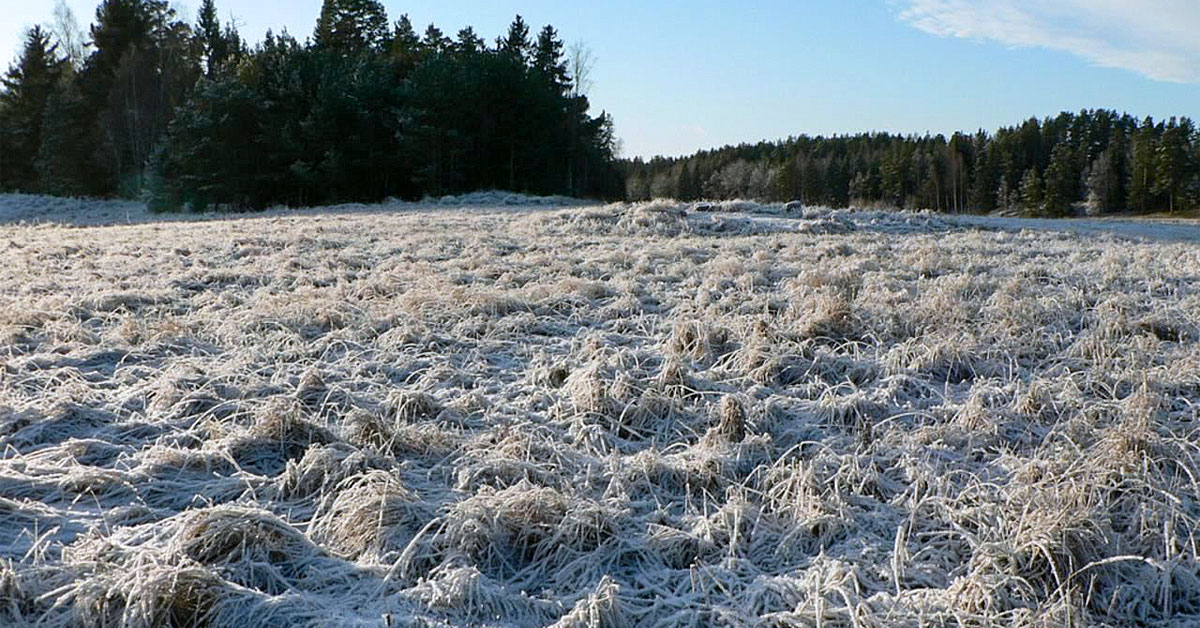
Credit: Rosendahl, Public domain, via Wikimedia Commons
All too often, a silent threat sweeps through California's fields and orchards: frost. Unlike floods or wildfires, a frost event can be invisible until farmers walk out to find an entire season's worth of crops destroyed overnight. In the United States, agricultural losses from frost damage exceed those from every other weather-related phenomenon. Yet for generations, the primary defense has been a farmer's intuition and a manual thermometer reading.
That's starting to change — and it’s starting with students.
California agricultural nonprofit F3 Innovate recently held a student competition to build predictive models for frost events based on historical data. The Frost Risk Data Challenge brought together teams from several universities to build systems that can give growers earlier, more reliable frost warnings. The goal wasn't just academic: the techniques developed are intended to be transferable to farming regions across the country.
To make the challenge possible, F3 Innovate partnered with the Societal Computing and Innovation Lab (SCIL), a lab within the San Diego Supercomputer Center (SDSC) at the University of California San Diego, which proved to be a critical partner in helping the next generation build agricultural forecasting tools for the future.
Supercomputing Meets Agriculture
Traditional numerical weather forecasts operate at scales too large to be useful for an individual farm, particularly in complex or mountainous terrain where temperatures can vary dramatically over short distances.
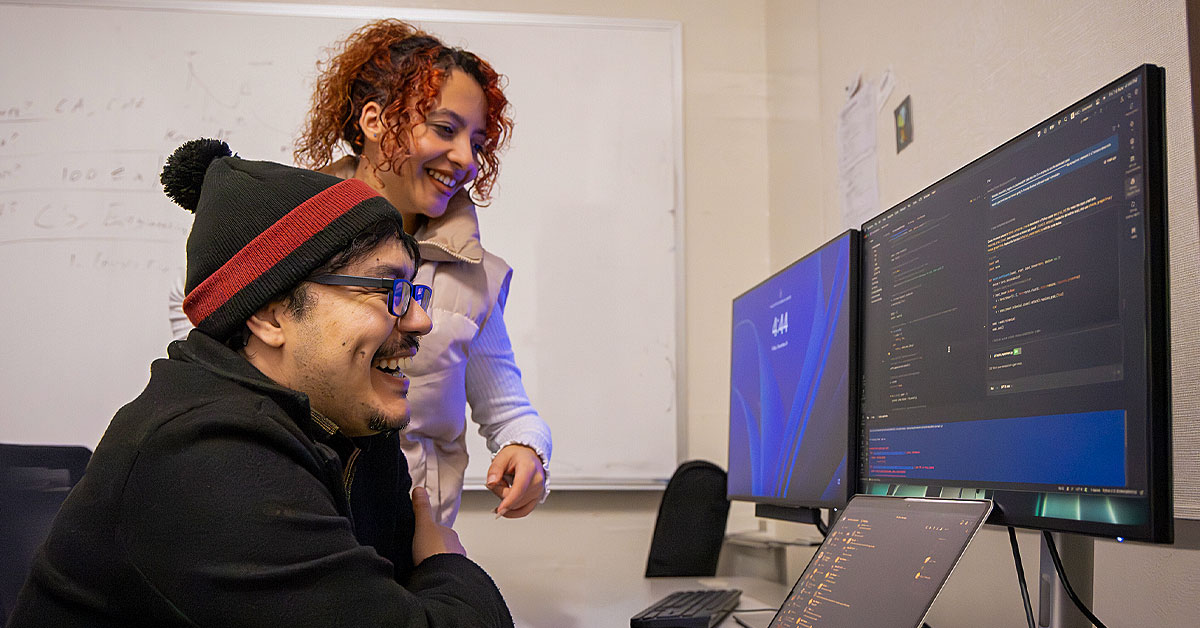
Machine learning models trained on local microclimate data have the potential to outperform those legacy systems, delivering field-level accuracy that could give farmers hours of additional warning time before a damaging frost arrives. For small-scale farmers especially, those extra hours can mean the difference between a viable harvest and financial hardship.
What made this challenge possible, and what set it apart from a typical student exercise, was access to national supercomputing infrastructure. Teams didn't just theorize; they used high-performance computing resources to develop, train and test their models on actual datasets.
Both SDSC and SCIL are part of UC San Diego’s School of Computing, Information and Data Sciences, where student-driven challenges like this are central to the mission. As a leader in high-performance and data-intensive computing, SDSC and its entities like the National Data Platform (NDP) provide resources and expertise to research communities across academia and industry, including emerging fields like agricultural data science.
"NDP aims to bridge the gaps between data and computing infrastructure to accelerate research, education and innovation," said SCIL Director and SDSC Chief Data Science Officer Ilkay Altintas. She said that the platform is specifically designed to empower students, educators and researchers to participate in AI-integrated solutions for real-world problems.
The Frost Risk Data Challenge is one example of a growing movement to bring advanced data science to bear on agriculture's oldest challenges. By connecting student talent with real-world datasets and supercomputing resources through advanced infrastructural platforms, initiatives like F3 Innovate are helping cultivate the next generation of agricultural data scientists while giving local farmers smarter tools to protect their livelihoods.
To learn more about F3i's work and watch the challenge kickoff webinar, visit f3i.org.
To explore SCIL’s National Data Platform and its catalog of open digital assets, visit nationaldataplatform.org.
Top Teams in Data-Driven Agriculture"The Frost Risk Data Challenge provided a platform for students to showcase their talents, while fostering collaboration and innovation within the data analytics community," said Ryan Dinubilo, director of innovation for F3 Innovate. After rigorous judging based on accuracy, creativity and the real-world effectiveness of their solutions, three student teams rose to the top: |