

Cracking the Code of Parkinson’s: How Supercomputers Are Pointing to New Treatments
Published December 02, 2025
More than one million Americans live with tremors, slowed movement and speech changes caused by Parkinson’s disease — a degenerative and currently incurable condition, according to the Parkinson’s Foundation and the Mayo Clinic. Beyond the emotional toll on patients and families, the disease also exerts a heavy financial burden. In California alone, researchers estimate that Parkinson’s costs the state over six billion dollars in healthcare expenses and lost productivity.
Scientists have long sought to understand the deeper brain mechanisms driving Parkinson’s symptoms. One long-standing puzzle involved an unusual surge of brain activity known as beta waves — electrical oscillations around 15 Hertz observed in patients’ motor control centers. Now, thanks to supercomputing resources provided by the U.S. National Science Foundation’s ACCESS program, researchers may have finally discovered what causes these waves to spike.
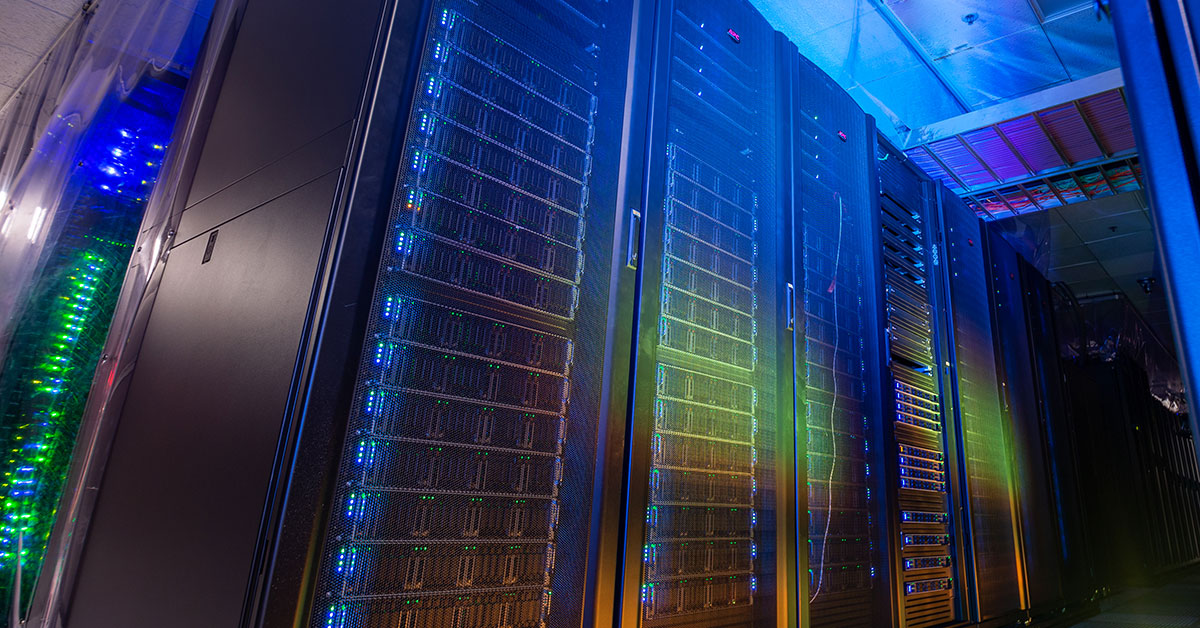
Using ACCESS allocations on the Expanse system at the San Diego Supercomputer Center — part of UC San Diego’s new School of Computing, Information, and Data Sciences — researchers with the Aligning Science Across Parkinson’s (ASAP) Collaborative Research Network modeled how specific brain cells malfunction in Parkinson’s disease. Their findings could pave the way for more targeted treatments.
“To create a faithful model of Parkinson’s disease in the brain, we started with data from rodent models and fed it into sophisticated simulations powered by Expanse.” - Donald W. Doherty, research scientist at SUNY Downstate Medical Center. Image credit: SDSC
Donald W. Doherty, a research scientist at State University of New York (SUNY) Downstate Medical Center and research scientist with the ASAP effort, explained how the team used the Expanse supercomputer to simulate brain activity.
“To create a faithful model of Parkinson’s disease in the brain, we started with data from rodent models and fed it into sophisticated simulations powered by Expanse,” Doherty said. “These simulations revealed how reduced activity in PT5B neurons — located in the primary motor cortex — disrupts communication across the entire brain network.”
Even small dysfunctions in these PT5B neurons were shown to cause major changes in beta wave activity, suggesting that the health of this single neuron type can dramatically influence motor control.
“What’s remarkable is that when these neurons stop working properly, they create a bottleneck that affects the whole motor system,” Doherty explained.
Currently, most Parkinson’s treatments aim to replace lost dopamine or broadly stimulate brain regions to relieve symptoms. The new research points to a more precise strategy: targeting PT5B neurons directly.
“Knowing that PT5B neurons are both impacted by the disease and essential for movement gives us a specific cellular target,” Doherty said. “That could lead to therapies that treat the root cause of motor symptoms rather than just managing them.”
Details regarding this work have been published in Nature.
Looking ahead, the ASAP network hopes to translate these insights into new clinical treatments — ones that restore normal neuron function or compensate for their loss. If successful, this approach could transform how Parkinson’s disease is treated and improve quality of life for millions.
Funding for the Expanse computations were provided by U.S. NSF ACCESS (allocation no. IBM140002).